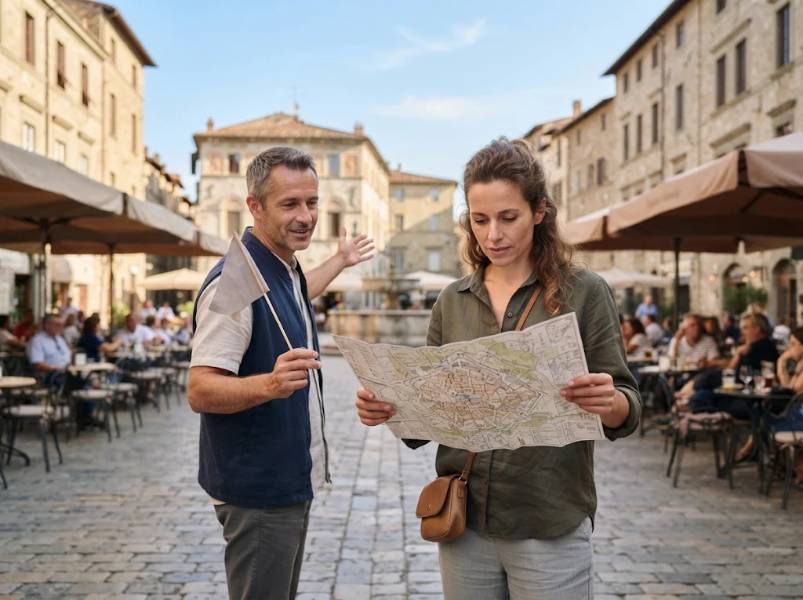
Arriving in an unfamiliar city can feel exciting and slightly overwhelming at the same time. Streets look confusing, signs are in another language and every guidebook seems to say something different. A simple method helps you find your feet quickly and enjoy the place more.
Do light research first
Before you leave, read about the main districts, the climate and any events during your stay. You do not need a full schedule.
A rough map in your head is more useful than a minute by minute plan.
Check official travel information
Government travel pages explain entry rules, health advice and safety alerts. See the U.S. Department of State international travel pages for general guidance before you go.
Local tourism offices add practical details.
Choose a smart base
Stay near public transport and in a lively but safe area. A central location saves time and money on transfers.
Read recent reviews that mention noise, safety and distance to stations.
Walk the first day
Walking is the fastest way to understand a city. Choose a loop of a few kilometers and stop whenever something looks interesting.
Look up to see architecture and down to find street signs.
Learn the neighborhoods
Cities are collections of small areas, each with its own mood. One may be historic, another artistic and another full of markets.
Spend an afternoon in each rather than rushing between sights.
Use public transport
Buses, metros and trams are cheap and show daily life. Buy a day or multi day pass if you will use them often.
Study the map for a few minutes and note the main lines.
Download offline maps
A map that works without data saves stress and roaming charges. Mark your hotel, stations and key sights.
Carry a small paper map as a backup.
Start early
Popular places are quieter in the morning and light is softer for photographs. Many cities feel entirely different at sunrise.
Save evenings for markets, music and dinner.
Eat where locals eat
Look for places with short menus, handwritten signs and queues of residents. Avoid restaurants with photo menus next to major attractions.
Ask your host or a shopkeeper for favorites.
Try the market
Markets show seasonal produce and street food at fair prices. They are also great for people watching.
Bring small bills and a reusable bag.
Respect local customs
Dress codes, greetings and tipping habits vary. Observe and follow what people around you do.
A smile and a polite greeting open many doors.
Use a few local phrases
Hello, please, thank you and sorry are enough to show respect. People usually appreciate even clumsy attempts.
Learn how to ask for the bill and for directions.
When you need real help
For complex conversations, such as medical visits or legal matters, a professional interpreter is far safer than guessing. Our article on interpreter vs translator explains the difference between spoken and written support.
Know which service you need before an emergency.
Portuguese speaking destinations
Lisbon, Porto, Rio and many other cities welcome visitors from around the world. Menus, signs and tourist materials are not always available in your language.
Tourism businesses often use Portuguese translation services to make websites and guides friendly to international guests.
Stay safe
Keep valuables out of sight, stay aware in crowds and avoid poorly lit areas at night. Use official taxis or trusted apps.
Share your plans with someone at home.
Protect your money
Carry only what you need and spread cash and cards in different places. Use machines inside banks when possible.
Notify your bank about your trip.
Take a free walking tour
Local guides explain history, point out hidden corners and answer questions. Tips are usually expected at the end.
It is an easy way to orient yourself on the first day.
Leave room for surprises
Some of the best moments are unplanned, such as a street concert or a quiet cafe. Keep a gap in your schedule for them.
Do not try to see everything.
Visit one museum, not five
Choose the museum that interests you most and take your time. Too many sights in a day blur together.
Check opening hours and free entry days.
Rest when tired
Sit in a park, have a coffee or return to your room for an hour. Rest keeps your mood good and your senses open.
Travel is not a competition.
Capture memories simply
Take photos, but also put the phone away and watch. Write a few lines each evening.
Collect small items like tickets and postcards.
Reflect and plan next time
On the last day, note your favorite moments and what you would change. These notes will guide your next trip.
A confident traveler learns something new every time.
Keep a simple daily rhythm
Plan one main activity in the morning, one in the afternoon and leave the evening open. This rhythm prevents burnout and gives space for spontaneous discoveries.
Be flexible with plans
If it rains or a place is closed, switch to your backup idea without frustration. Flexibility is the quiet skill of every experienced traveler.